Tank Repair
The order a fault gets worked on a storage tank, which components give out first, and what a diagnostic visit actually covers.
Tank, tankless, replacement, emergency, upkeep
Six pages sit under this section, and each one answers a different question. Two of them deal with conventional storage tanks, two with on-demand equipment, one with the hours when nothing is open, and one with the upkeep that decides how long any of it lasts. This page explains which is which so you can go straight to the right one.
Nearly every call sorts itself with two facts. The first is what kind of appliance you have, meaning a floor-standing cylinder with a burner or a set of elements, or a wall-hung box that fires only while a tap is running. The second is whether the appliance is misbehaving or has stopped entirely.
A cylinder that runs but underperforms belongs on the tank diagnosis page. A cylinder past twelve years old, or one showing rust at the base, belongs on the replacement page whatever the immediate symptom looks like. A wall-hung unit showing a number on its display belongs on the tankless repair page, because that number narrows the search enormously. Anyone considering the switch from one type to the other wants the installation page.
Households with nothing broken at all should read the maintenance page. It is the least urgent of the six and the one that changes outcomes the most, and the interval it argues for is shorter around here than the manuals assume.
Anyone who already knows the answer and only wants a plumber at the house can skip all six and dial. The pages exist to make the phone call shorter, not to stand in front of it.
Two local variables shape most of these jobs. Water chemistry is the first, and it applies on both sides of State Line whether the supply comes from the Missouri utility or from the Johnson County system. The second is housing stock, which varies far more.
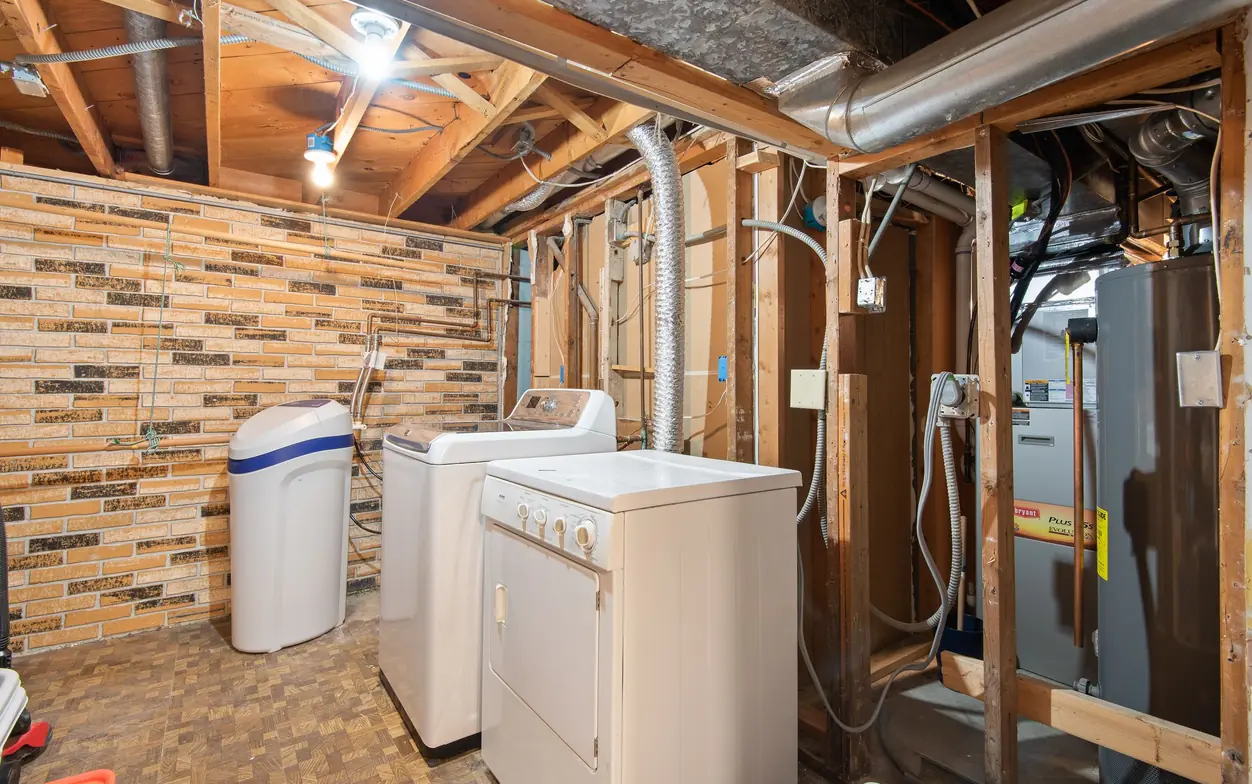
Deep basements under prewar houses in Brookside, Waldo, and the older northeast create access problems and long vent runs, and they frequently hide galvanized supply piping that affects hot water pressure independently of the appliance. Postwar and newer construction in the southern and western suburbs tends to put equipment in garages and utility closets, which makes access easy and imposes height limits that matter when a modern unit turns out to be taller than the one it replaces.
Jurisdiction is the third variable and it is purely administrative. Inspection practice and permit requirements are not uniform across the metro, and the address rather than the equipment determines which authority is involved. That is handled by the contractor who takes the work.
Each page below is written to stand on its own, with the specific failures, procedures, and decisions that belong to it. Ranges for parts and installed pricing appear on the two pages where figures are genuinely useful.
The order a fault gets worked on a storage tank, which components give out first, and what a diagnostic visit actually covers.
Choosing capacity and fuel, the upgrades a swap-out triggers, permits on either side of the state line, and how the old unit leaves.
Reading the fault code, clearing a scaled exchanger, and sorting ignition, flow sensor, and combustion air problems on an on-demand unit.
Gas capacity, vent routing, electrical and condensate, converting a basement tank location, and whether recirculation belongs in the plan.
Which failures cannot wait until morning, the shutoffs to hit before anyone arrives, and what after-hours dispatch realistically looks like.
Draining sediment on a sensible interval, checking the sacrificial anode, testing the relief valve, and setting pressure and temperature correctly.
This site is a referral line rather than a plumbing contractor, and it does not carry out the work. Calls route to independent plumbing contractors operating in the metro, and verifying license and insurance before work starts remains the homeowner's responsibility.
Phones are staffed continuously, including overnight and on holidays. Nothing is booked without your agreement and there is no cost to describe the situation. For the broader picture on Kansas City water heater repair, including the repair-or-replace threshold and metro-wide cost ranges, the front page pulls the whole subject together in one place.
Start with the symptom rather than the equipment. The symptoms section walks through what a specific complaint at the faucet usually indicates, and it points at whichever service page matches. If water is on the floor right now, skip the reading and use the emergency page instead.
Yes. One line handles tank work, tankless work, replacements, and after-hours situations across the metro. Describing the appliance and the symptom accurately matters far more than picking the right page before dialing.
No. Calls cost nothing and nothing gets scheduled without your agreement. Pricing for a visit is stated before anyone is dispatched.
They do. Coverage runs across State Line into Johnson County, so Overland Park, Olathe, Shawnee, Lenexa, and Leawood are included alongside the Missouri municipalities. Permit handling differs by jurisdiction and whoever takes the job files locally.